

JAPAN AND THE COLOMBIAN PACIFIC: BUENAVENTURA AS A STRATEGIC HUB
- cámara colombo japonesa
- May 22
- 5 min read

Written by: Angelly Triana, Intern in the International Relations Department

For decades, Buenaventura was perceived solely as Colombia’s main cargo port, yet one constrained by logistical limitations, social challenges, and underdeveloped infrastructure. However, within the context of the transformation of international trade and the growing importance of the Asia-Pacific region, this narrative has rapidly changed. Today, Buenaventura is emerging as one of the most strategic territories in Colombia and Latin America. Its privileged location on the Pacific Ocean, combined with its port relevance and logistical potential, has positioned the city as a driving force of Colombian foreign trade, handling nearly 45% of the country’s international cargo. As a result, Buenaventura has become a key hub for strengthening connectivity between Colombia and Asian economies, particularly with Japan, one of the world’s leading economic and technological powers and an increasingly important partner for the Latin American country.
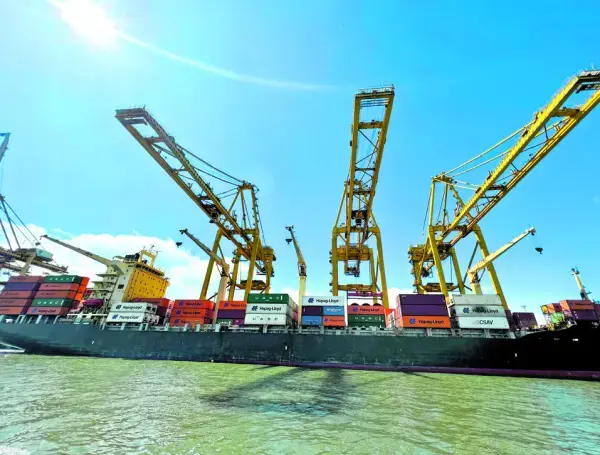
Over the past decades, Japan has consistently demonstrated a strong interest in Latin America as a strategic region for trade, investment, and international cooperation. In this context, Buenaventura represents not only a gateway to South America, but also a key scenario for cooperation in resilient infrastructure and inclusive regional development. In 2019, a delegation of Japanese business representatives coordinated by the Japan External Trade Organization (JETRO) visited the port in order to assess firsthand its infrastructure and port security conditions. The visit highlighted Buenaventura’s logistical and strategic potential for future investment and cooperation opportunities.
On the other hand, the departments of Valle del Cauca and Chocó are emerging as a strategic axis for the energy transition due to their exceptional conditions for green hydrogen production, including favorable coastal winds, abundant water resources, and an energy matrix in which nearly 90% of electricity already comes from renewable sources. The interest of Japanese multinational corporations is playing a key role in this process. While Sumitomo plans to build a hydrogen plant in Buenaventura (Camacho, 2025), Kawasaki Heavy Industries is recognized globally for leading the development of technologies required for the commercial transport of liquefied hydrogen (Schepkov, 2026). If these initiatives materialize, the Port of Buenaventura will evolve from being solely a logistics center into a globally relevant energy hub capable of supplying clean fuels for international maritime transportation.

In a world where logistics and connectivity have become determining factors for economic growth, modern ports operate as true strategic hubs capable of integrating trade, industry, technology, and services. In this regard, Buenaventura has the potential to become a first-class logistics center for the Latin American Pacific region. This projection is supported by the World Bank’s Container Port Performance Index, which currently ranks Buenaventura as the second most efficient port in Latin America and the 28th worldwide (Cuéllar, 2022). Therefore, the modernization of its port infrastructure, the expansion of logistics corridors, and the strengthening of land connectivity are essential elements for consolidating this vision. It is precisely in this area where Japan plays a significant role, given its extensive experience in developing efficient and sustainable logistics ecosystems, thereby creating important opportunities for bilateral cooperation.

To consolidate Buenaventura as the strategic hub envisioned by Japanese companies, Colombia has launched world-class infrastructure projects. The most ambitious among them is the Fifth Generation (5G) Buga–Buenaventura Project, which involves an investment of approximately 4.6 trillion Colombian pesos. This initiative is crucial for national competitiveness, as it aims to complete the dual-carriageway corridor connecting the port with the country’s interior, reducing travel times by approximately 40 minutes and optimizing transport logistics for strategic sectors such as agricultural production (ANI, 2025).

Complementing the land corridor, the reactivation of the Pacific Railway has emerged as a fundamental pillar of the intermodal strategy. The National Government is currently advancing the technical feasibility studies for the Buenaventura–Palmira section, which covers approximately 120 kilometers. This project could be of significant interest to Japan, a global leader in
railway technology, as both nations share similar geographical conditions, including mountainous terrain and high seismic activity. Consequently, Japanese technology is positioned as an ideal model for the development of railways and tunnel infrastructure in Colombia (CONPES, 2025).
In an international context marked by the reorganization of global supply chains and the search for new markets, Colombia has the opportunity to position itself as a relevant logistical actor within trans-Pacific trade.
Nevertheless, as mentioned initially, although strengthening Buenaventura as a strategic hub is the most urgent task for enhancing Colombia’s competitiveness in the 21st century, it is also necessary to recognize the structural challenges that have historically affected the territory. Despite being one of the country’s main economic engines, the city continues to face high levels of poverty, inequality, and limited access to basic services. Therefore, the real challenge lies in ensuring that the economic growth generated by port expansion translates into tangible well-being for local communities. In this regard, cooperation between Colombia and Japan can extend beyond physical infrastructure and encompass technical training programs, educational strengthening, and community development initiatives. Japan’s experience in urban planning, risk management, and sustainable development could significantly contribute to building a more resilient and inclusive city.
The Colombian Pacific is destined to play a leading role in the relationship between Latin America and Asia. Buenaventura, with its internationally recognized port efficiency, ongoing large-scale infrastructure projects, and growing attractiveness for foreign investment, stands at the threshold of a historic transformation. In this context, Japan emerges as a fundamental partner in promoting innovation, infrastructure development, and sustainable growth in the Colombian Pacific region.
The consolidation of this relationship would not only strengthen the economic competitiveness of both countries, but also create new opportunities to build a model of growth that is more inclusive, resilient, and connected to the dynamics of global trade. The future of Buenaventura will depend on its ability to transform its geographical potential into social development, international cooperation, and regional leadership.
References:
Agencia Nacional de Infraestructura. (2025, Agosto 11). Proyecto 5G Buga – Buenaventura, cierra la financiación sostenible por 3,66 billones de pesos. Portal ANI. https://www.ani.gov.co/proyecto-5g-buga-buenaventura-cierra-la-financiacion-sostenible-por-366-billones-de-pesos
Camacho, J. A. (2025, mayo 22). Hidrógeno Verde Impulsa Inversión Europea. Elvalluno.com - La Actualidad Positiva. https://elvalluno.com/hidrogeno-verde-impulsa-inversion-europea/
CONPES. (2025). Declaración de Importancia Estratégica de los Proyectos de Inversión para el mejoramiento de Corredores Ferroviarios por obra pública, específicamente en el Corredor del Pacífico y el Corredor Bogotá - Belencito. Gov.Co. https://colaboracion.dnp.gov.co/CDT/Conpes/Econ%C3%B3micos/4160.pdf
Cuéllar, L. (2022, Noviembre 4). “Buenaventura y el Pacífico son la puerta de Asia.” Colombia Visible. https://colombiavisible.com/buenaventura-y-pacifico-son-la-puerta-a-asia-liborio-cuellar/
Gaitán, I. S. (2025, Octubre 3). “Somos el segundo puerto más competitivo de toda América Latina.” Diario La republica. https://www.larepublica.co/especiales/la-ruta-del-valle-por-la-sostenibilidad/somos-el-segundo-puerto-mas-competitivo-de-toda-america-latina-4238864
KOBAI. (2021). KOBAI Contacto con Japón. Edu.co. https://revistas.uniandes.edu.co/index.php/kobai/article/view/7755/8333
Schepkov, V. (2026). Kawasaki Heavy construirá el mayor transportador de hidrógeno licuado del mundo. Investing.com. https://es.investing.com/news/stock-market-news/kawasaki-heavy-construira-el-mayor-transportador-de-hidrogeno-licuado-del-mundo-93CH-3453987


Comments